Laminated Log Cabins
Engineered log construction, explained for homeowners — and matched with builders who work with it.
A laminated log cabin uses wall logs built from several layers of kiln-dried lumber bonded together under pressure, rather than single solid timbers. The practical result for a homeowner is a log home that does not settle, shrink, or need the ongoing chinking and jack adjustments traditional log walls require. It costs more per log than solid stack construction and less in long-term maintenance. This guide covers how the system works, what it costs, how it compares to solid logs, and how to find a builder who has actually worked with it.
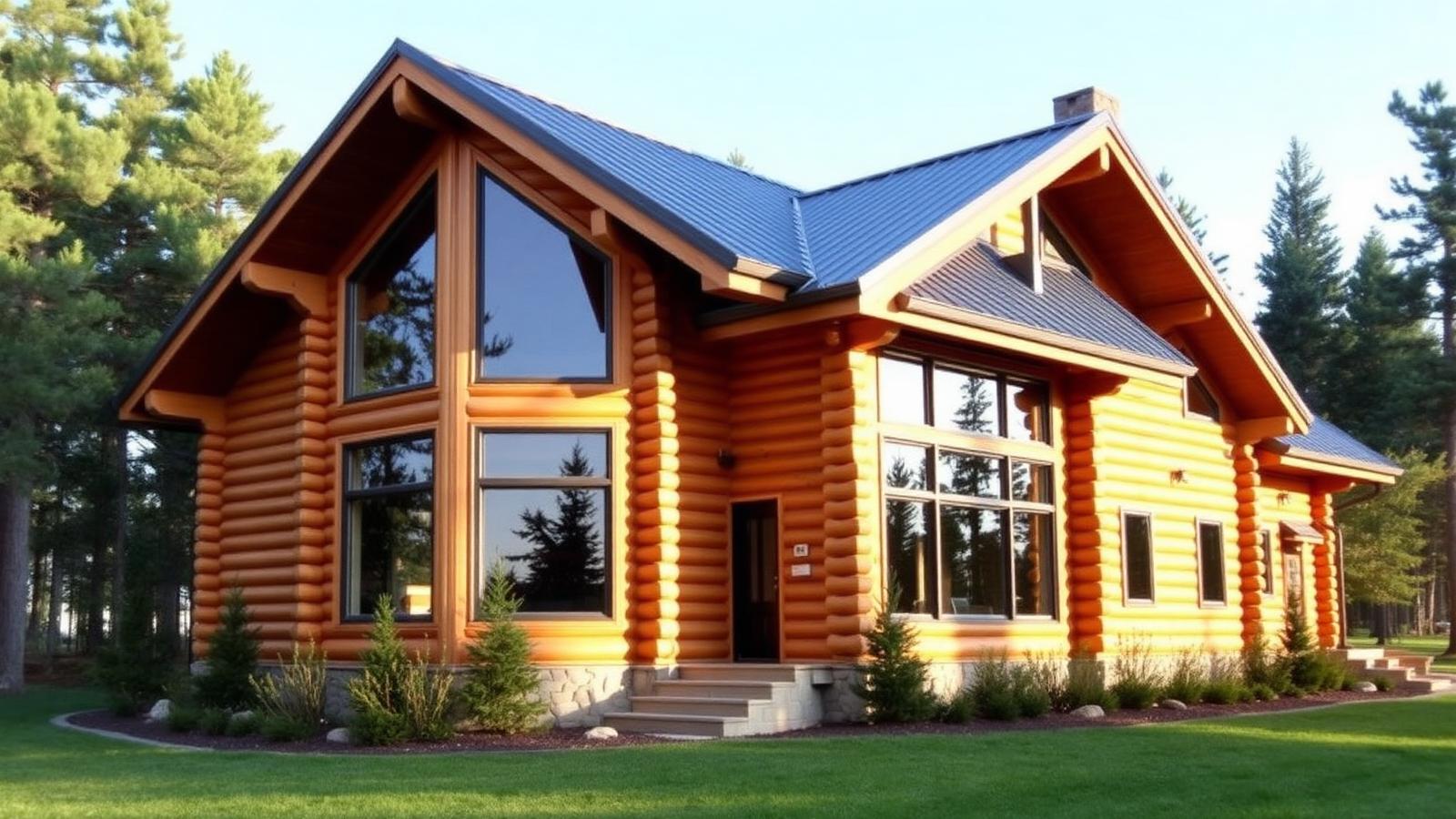
What Makes a Laminated Log Different
Solid logs are single pieces of timber. As they dry and acclimate they shrink, twist, and check — which is why traditional log homes need settling allowances above doors and windows, adjustable jacks under posts, and periodic re-chinking to keep joints sealed.
Laminated logs are built differently. Several layers of lumber are dried to a controlled moisture content, then bonded under pressure into one structural timber and milled to a consistent profile.
Because the moisture is removed before assembly rather than after installation, the wall stays dimensionally stable once it is standing. That single difference drives nearly every other advantage and trade-off below.
Why Homeowners Choose Laminated Logs
- No settling, so windows, doors, interior finishes and mechanicals can be installed without adjustment allowances.
- No screw jacks to install or adjust over time.
- Tighter, more consistent joints, which generally means less air leakage.
- Longer clear spans and larger window openings than comparable solid logs.
- A more predictable schedule, since the wall system does not need an acclimation period before finish work.
The Trade-Offs Worth Knowing
- Higher upfront material cost than solid stack log construction.
- Fewer manufacturers than conventional framing, which can mean longer lead times and freight considerations depending on your location.
- Not every builder has worked with engineered log systems, which is why builder selection matters more here than on a conventional build.
- Appraisal and resale can be less predictable than conventional construction in markets where log homes are uncommon.
- Some buyers simply prefer the look of a traditional hand-hewn solid log.
What a Laminated Log Cabin Costs
Pricing on a log project splits into two very different numbers. The first is the shell or wall package — the logs, the milled profile, fasteners and sealing components, and often the roof system, delivered to your site. The second is the finished turnkey cost: site work, foundation, dry-in, mechanicals, interior finishes, and everything else that turns a shell into a home.
The gap between those two numbers is where most homeowner budgets go wrong. A package quote is not a house, and comparing one manufacturer's package price to another builder's turnkey estimate is not a comparison at all. Site access, foundation type, and finish level typically move the turnkey number far more than the log species or profile does.
For a fuller breakdown of how the two numbers relate, see our guide to laminated log cabin cost. If you already have a package quote in hand, a free project consultation is a good way to sanity-check what it does and does not include.
Laminated Logs vs Solid Logs
The short version: solid logs offer the traditional look and a lower material cost, but they move as they dry and require settling details and ongoing maintenance. Laminated logs cost more up front and look more uniform, but they hold their dimensions, allow larger openings, and take maintenance items like re-chinking and jack adjustment off the table.
Neither is universally better — the right answer depends on your climate, your budget split between build and upkeep, and how much you value the hand-hewn look. We break the decision down side by side in laminated vs solid log homes.
What to Look For in a Builder
Tireless Construction does not manufacture log materials or build homes — we connect homeowners with qualified, licensed local contractors. That vantage point is exactly why we push homeowners to interview log builders differently than they would interview custom home builders for a conventional project.
- Ask how many engineered or laminated log projects the builder has completed — not how many log homes generally.
- Ask whether they have worked with the specific manufacturer supplying your package.
- Confirm who is responsible for the dry-in and for following the manufacturer's assembly sequence.
- Ask how they handle the interface between the log wall system and conventional framed sections, which is where most detailing problems occur.
- Confirm local code familiarity, particularly in wildfire, high-wind and seismic jurisdictions where log wall assemblies have specific requirements.
If you already own acreage, the same questions apply to any builder willing to build on your lot, and many of the contractors who take on log packages also build barndominiums and other post-and-beam style projects.
Frequently Asked Questions
What is a laminated log cabin?+
A log home built with wall logs made from multiple layers of kiln-dried lumber bonded under pressure into a single structural timber, rather than from single solid logs. The main practical benefit is that the walls do not settle or shrink after construction.
Are laminated logs stronger than solid logs?+
Engineered timbers generally achieve better strength-to-weight performance than solid sawn logs of similar size, because natural defects are distributed across laminations rather than concentrated in one piece. This allows longer spans and larger openings. Specific performance varies by manufacturer and product.
Do laminated log homes still need chinking?+
Generally no. Because the walls do not settle, precision-milled profiles stay sealed over time, which removes the periodic re-chinking that traditional solid log walls require.
Are laminated log cabins more expensive?+
The wall package typically costs more than solid stack log construction, but lifetime maintenance is lower because there is no settling adjustment, re-chinking, or jack maintenance. Whether the total cost of ownership is higher depends on the build and how long you keep the home.
How long does a laminated log cabin take to build?+
Timelines vary widely by size, site, and package lead time. One scheduling advantage over traditional log construction is that interior finishes and mechanicals can proceed without waiting for the wall system to settle.
Can you build a laminated log cabin anywhere?+
In most jurisdictions, yes, though wildfire, high-wind and seismic areas have specific requirements that affect design and detailing. A builder familiar with log wall systems in your local code environment matters more than in a conventional build.
Qualified Contractors Across the Country
Wherever you're building, our nationwide network helps you find experienced local pros ready to take on your project.
Start Your Log Home Project
Tell us about your project and we'll connect you with qualified local professionals. Your consultation is free with no obligation.
- Free project consultation
- Quotes from qualified local contractors
- No pressure, no obligation
- Nationwide coverage